Skip to content

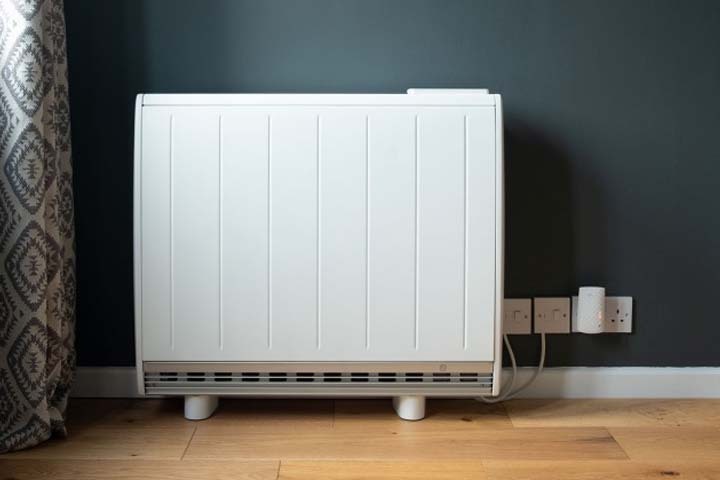
We didn’t know we needed a heating system able to store energy in off-peak hours and retain the same energy to heat our homes in peak hours. A high retention electric storage heater packs ceramic bricks or high-density panels that absorb heat and retain it for longer periods.
Unlike those on-demand electric radiators, which burn expensive daytime electricity, storage heaters charge between midnight and 7 AM when rates fall by 50-70%.
We have put together this guide for the sole aim of delivering much-needed information on what electric storage heaters are and how they save energy for UK households.
How Storage Heaters Actually Work
Inside an electric storage heater, there is a heating element wrapped around the ceramic bricks or the feolite cores. That element fires up at off-peak hours and heats the bricks up to roughly 650°C. The dense material then locks in that thermal energy behind thick insulation.
As morning arrives, by natural convection, hot air rises, cold air sinks, and the room heats up. Fan-assisted models speed this up with mechanical fans that push heat harder when you need it.
Charging Cycles and Smart Controls
Most units pull 1-3 kilowatts in the charging window controlled by a timer synced to your supplier’s off-peak schedule. Modern versions go farther, checking weather forecasts, analyzing your usage patterns, and calculating exactly how much energy to store.
The best models retain 45% of the stored heat even after 24 hours of charging. That is engineering, not magic. Better insulation means less waste equals lower bills.
Key Controls Of an Electric Storage Heater
Most storage heaters have two dials. Learn them or waste money.
Input dial sets overnight charging levels. High input = more stored heat = higher costs. Low input = less heat = potential discomfort. Check tomorrow’s weather. Adjust accordingly. It’s not rocket science.
The output dial controls the daytime heat release. Wide open = fast heat dispersal = early depletion. Closed down = slow release = heat lasts longer. Are you home all day? Crank it. Out until evening? Keep it low.
Modern Features Worth Paying For
Premium models add WiFi control, programmable schedules, and remote smartphone access. Some include open window detection, sensors catch sudden temperature drops and pause heating to stop wasting stored energy.
Efficiency and Real Running Costs
Storage heaters hit 100% conversion efficiency. Every watt you pay for becomes heat. Gas boilers? They lose 10-15% through flues and pipes. But here’s the catch: electricity costs more than gas per kilowatt-hour.
That’s where tariff timing saves you.
The Economy 7 Advantage
Tariff TypeOff-Peak RatePeak RateDaily Charge Cost (2kW heater, 7hrs)Economy 7~13p/kWh~35p/kWh~£1.82Standard~28p/kWh~28p/kWh~£3.92
Run a 2kW storage heater on Economy 7, and you’ll spend roughly £1.82 per night charging. That’s £665 annually for the heating season. Same heater on standard rates? £1,430 per year. The math doesn’t lie.
Installation and Maintenance
Installation takes hours, not weeks. A qualified electrician mounts the unit, connects the wiring, verifies grounding, and you’re done. No pipework, no boiler, no structural demolition. Cost: £150-£300.
Maintenance (Or Lack Thereof)
These things barely need attention. No moving parts except optional fans, no combustion byproducts. No leaks. No carbon monoxide risk. Most manufacturers call them maintenance-free for their entire 15-20 year lifespan.
Who Should Install Storage Heaters?
Storage heaters excel in specific situations:
- Retirees and remote workers who are home during peak heat release hours
- Properties without gas access in rural areas or conservation zones
- Long-term occupants who’ll benefit from low maintenance and stable costs
- Solar panel owners who can charge units with free daytime renewable energy
They’re terrible for:
- People who work late and need evening warmth (stored heat depletes by 8 PM)
- Households with unpredictable heating needs
- Anyone without access to Economy 7 or Economy 10 tariffs
Know your schedule. Know your tariff. Make an informed decision.
Storage Heaters vs Other Heating Systems
vs Gas Central Heating
Gas is cheaper to run (for now) and heats on demand. But gas requires annual servicing, boiler maintenance, and installation costs £2,000+. Storage heaters need neither.
vs Electric Radiators
Electric radiators offer instant heat and complete flexibility. They also cost 47% more annually because they run on peak-rate electricity. Storage heaters demand planning but deliver superior cost efficiency.
vs Heat Pumps
Heat pumps achieve 300-400% efficiency by extracting ambient heat. They’re the future. They also cost £5,000-£15,000 to install and require complex infrastructure. Storage heaters remain the accessible electric heating option.
Modern Smart Features
WiFi-enabled models let you control everything from your phone. Adjust input levels remotely. Modify schedules on the fly. Monitor real-time energy consumption. Some use WiFi Direct technology, which connects straight to your router without gateway hardware.
Intelligent charging algorithms analyse weather forecasts and your usage history to calculate optimal charging levels. Cold snap coming? They charge more. Mild week ahead? They back off. This adaptive approach cuts waste by 15-20%.
The Bottom Line
Storage heaters work brilliantly if your situation fits their operating model. They’re low-maintenance, cost-effective, and straightforward to install. But they demand consistent daytime presence and access to off-peak tariffs.
The technology hasn’t changed much in principle, but modern engineering has refined it considerably. Better insulation, smarter controls, and adaptive charging transform a basic concept into a genuinely efficient heating solution.
Frequently Asked Questions
Technically yes. Financially? Terrible idea. Without off-peak rates, you’re paying 28-35p per kilowatt-hour instead of 13p. That’s a 115% cost increase overnight. You’ll spend roughly £1,430 annually instead of £665 for the same heat.
They work brilliantly together, but you need the right setup. Modern WiFi-enabled storage heaters can charge during daylight hours using surplus solar electricity. This bypasses off-peak rates entirely—you’re storing free energy.
Depends on the model and outside temperature. Basic units lose heat steadily—you’ll have decent warmth until 6-7 PM. High Heat Retention models maintain 45% of stored heat for 24 hours, meaning usable warmth well into the evening.
Each storage heater operates independently with its own input and output controls. Want the living room warmer than the bedrooms? Adjust input dials accordingly. This gives you room-by-room control, unlike central heating, where one thermostat rules everything.
Basic models cost £150-£200. High-performance HHRSH units run £300-£500. Installation adds £150-£300. Total investment: £300-£800 per heater. A typical 3-bedroom home needs 3-4 units, so budget £1,200-£3,200 for whole-home replacement.
You’re cold until the next charging cycle. That’s the fundamental limitation. Some premium models include a “boost” function, a small element that provides emergency heat using peak-rate electricity. Use it sparingly; it’s expensive.