Skip to content


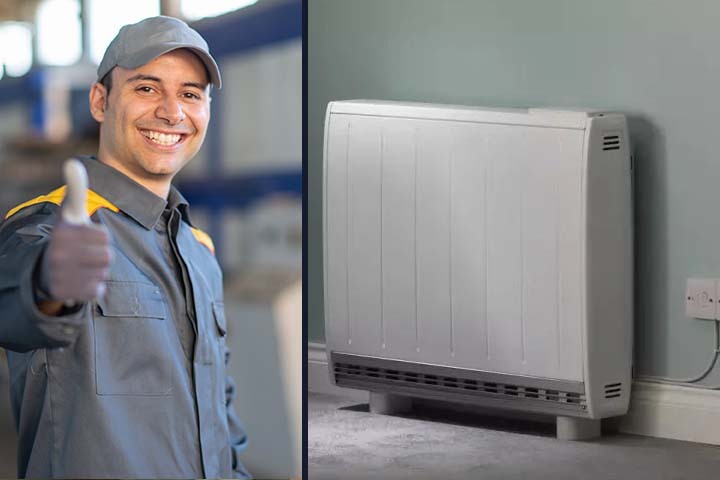
A great many UK homes – especially flats and those properties not connected to the gas main – have long relied on electric storage heaters. They’ve been around for decades, but in recent years, they have gained new interest as energy prices shift. Properties off the mains gas seek cheaper alternatives, and government incentives favour greener heating systems.
Whether you are considering upgrading your old heating system, moving towards a greener off-grid solution, or applying under the ECO4 Scheme, understanding electric storage heaters is key. This guide explains exactly what they are, how they work, and the different types, so you can determine if they are the right option for your home.
What are Electric Storage Heaters?
Electric storage heaters are heating units that store heat during off-peak electricity hours – usually at night, when it is cheaper – and release it during the course of the day. They are nearly 100% efficient at the point of use in converting electricity to heat, but their overall efficiency depends upon how they’re used.
They operate on a simple principle:
Charge when electricity is cheap → Store heat → Release when your home needs warmth.
They are commonly used in:
- Homes without mains gas
- Flats and apartments
- Rural and off-grid properties
- Older homes with electric room heaters only
- Properties on Economy 7 or Economy 10 tariffs
Unlike traditional electric heaters that provide instant heating but are more expensive to operate, storage heaters take advantage of low-cost electricity, making them far more economical and energy-efficient.
Key Components Inside a Storage Heater
To understand how they work, it helps to know what’s inside.
- Heating elements
These warm the internal bricks using electricity.
- High-density heat-retaining bricks
Made from ceramic or clay, they store a lot of heat for a very long time.
- Insulated casing
This prevents the heat from escaping too quickly.
- Air vents & thermostatic controls
These control the rate at which heat is put out and how much.
- Sensors (in modern models)
Measure room temperature, energy use, and charge requirements.
How Do Electric Storage Heaters Work?
Electric storage heaters have mainly two parts:
(1) The charging system
(2) The heat release system.
Step-by-Step: How They Work
- They charge overnight
It contains within it a mass of hard, ceramic, or clay bricks that absorb and retain heat.
During off-peak hours (usually midnight to 7 am), the heater draws low-cost electricity to heat these bricks.
- Heat is stored inside the unit
The stored heat remains locked inside for several hours owing to the insulated bricks.
- The heater gives out heat slowly.
Throughout the day, the heater slowly releases the stored heat into your rooms. Modern units let you control how much heat is released and when.
- Smart control adjusts heating to your routine
Modern storage heaters can predict how much heat you’ll need the next day and adjust the charge levels accordingly to avoid waste.
Why Are Storage Heaters Popular in the UK?
- They are ideal for homes that do not have gas supplies.
- They work well with off-peak electricity tariffs.
- They comply with ECO4 grants.
- They are simple, reliable & long-lasting.
Types of Electric Storage Heaters
Not all storage heaters are created equal, and the technology has undergone significant refinement over the years.
Manual Storage Heaters (Old Style)
These are the classic units installed in the 1970s–2000s.
They contain two dials:
- Input: heat that is to be stored
- Output: how much heat to release
Advantages
- Easy to use
- Cheap to run on Economy tariffs
Drawbacks
- Release heat even when you don’t want it.
- Often run out of heat by evening
- Poor insulation
High Heat Retention Storage Heaters
These are the modern standard – and the type funded under ECO4. They store heat more efficiently, keep it for longer, and provide precise temperature control.
Features include:
- Digital thermostats
- Smart charging management
- Programmable timers
- Fan-assisted heat release
- Heat lasts into the late evening.
These heaters also meet the LOT 20 regulations and provide the best energy savings.
Are Electric Storage Heaters Energy Efficient?
Yes – especially the high-heat-retention type. Electric storage heaters are nearly 100% efficient at converting electricity into heat at the point of use, but their overall efficiency depends on how they are used.
Storage heaters are designed to:
- Use cheaper night-time electricity
- Cut down on daylight electricity consumption
- Store heat in a very efficient way
- Minimise waste – modern insulation
Many homes see up to 30–50% lower heating costs versus old electric room heaters.
Cost of Running Storage Heaters in 2026
Costs depend on:
- Your tariff
- Your type of heater
- The insulation of your home
- Your heating habits
But speaking broadly:
- On Economy 7: cheaper to run
- On standard tariffs: much more expensive
This is the reason many households are turning to air source heat pumps and government-funded heating upgrades through ECO4 or LA Flex.
Benefits of Electric Storage Heaters
Here are the key benefits of electric storage heaters:
- Lower Running Costs on Off-Peak Tariffs
Electricity is cheaper at night. The storage heaters take full advantage of this.
- No Boiler, No Moving Parts, No Annual Servicing
This reduces costs related to maintenance and other risks of breakdowns.
- Ideal for Off-Gas Homes
If your home does not have mains gas, storage heaters are one of the most cost-effective heating solutions.
- ECO4 Scheme Covers Them 100%
If you are eligible, modern storage heaters can be installed fully free of charge.
- Quiet and Safe
No flues, fuels, carbon monoxide risks, or noisy fans.
- Long Life
Most last decades with minimal upkeep.
Are There Any Drawbacks?
Although there are numerous benefits to storage heaters, they are not for every home.
- They need space
- These units are heavier and bulkier compared to standard radiators due to the heat bricks inside.
- They can release some heat when not required.
- Older models in particular leak heat gradually, even on low output.
Best savings require off-peak tariffs. Homes not on Economy 7 or Economy 10 won’t save as much. Late-night heating may be planned. If your routine changes daily, so does the level of heat.
Who Are Electric Storage Heaters Best For?
Storage heaters are best utilised for:
- Electric-only homes
Especially where no gas boilers are installed.
- Flats or apartments
So many flats in the UK are heated electrically.
- ECO4-eligible households
Those who are qualified for free high heat retention storage heaters.
- Households that require low-maintenance heating
No servicing, no boiler breakdowns.
Electric Storage Heaters Under the ECO4 Scheme
Under the ECO4 Government Scheme, eligible households can receive: Free High Heat Retention Electric Storage Heaters. This is energy-efficient heating, especially for electric homes.
These are the latest LOT 20 compliant models. You also get a free survey and installation. It is fully funded. No labour cost involved, no hidden charges. ECO4 is focused on EPC ratings and fuel poverty.
You may qualify if:
- Your home has a poor EPC (like E, F, or G)
- You receive qualifying Government benefits
- Your home relies on outdated room heaters or old electric storage heaters
- You are off-gas or electric-only
Storage Heaters vs Air Source Heat Pumps: Which One Is Right for Your Home?
Under the ECO4 scheme, air source heat pumps are the top priority because they’re far more efficient. A heat pump can produce 3× more heat per unit of electricity compared to traditional electric storage heaters. This makes them cheaper to run, better for long-term savings, and far more eco-friendly.
But not every home has the right setup for this purpose.
If your property lacks the outdoor space for a heat pump unit, or the layout doesn’t support the required pipework, ECO4 may instead offer modern high-heat-retention electric storage heaters. These are still efficient and low-maintenance, plus a significant upgrade from old electric systems.
In short:
- ASHP = Priority option (best efficiency & savings).
- Storage heaters = A reliable alternative when a heat pump isn’t suitable.
Both solutions help lower energy costs and improve your EPC rating under ECO4.
Cost of Electric Storage Heaters in the UK
Buying and installing modern high-heat retention storage heaters can cost £900 – £2,000 for the average 2–3 bedroom house.
This includes supply, installation, wiring upgrades, and thermostat controls. However, under ECO4, qualifying households could get them for free.
Should You Upgrade to Modern Storage Heaters?
If you currently use:
- Old electric room heaters
- Old-style storage heaters
- Portable electric heaters
- Panel heaters
- Electric fires
Upgrading to HHR storage heaters can then dramatically cut your heating costs. They are efficient, safe, quiet, long-lasting, and highly compatible with ECO4 funding.
So, Are Storage Heaters Still Worth it?
Of course – yes. Electric storage heaters remain the most efficient heating solution for UK homes with no access to gas. With their modern technological features, advanced insulation, and smart controls, high-heat-retention models available today perform exceedingly well at a fraction of the running cost when compared to traditional electric heating solutions.
This makes for an offer that is particularly tempting for any household qualifying under the ECO4 Scheme: brand-new units installed free, boosting your EPC rating and lowering your bills.
Whether it is for a cleaner, safer heating solution or substituting inefficient heaters, storage heaters are a reliable long-term investment in comfort and energy efficiency in the home.
Frequently Asked Questions
Yes. Storage heaters charge at night using off-peak electricity, which is cheaper than daytime rates. This makes them more cost-effective to run than standard electric heaters, provided you are on an Economy 7 or similar tariff.
The modern high-heat-retention models function well during UK winters, storing heat overnight and releasing it during the day. The older manual ones might struggle a bit, but newer units give steadier warmth.
Most electric storage heaters will have a life of 15–25 years. Maintenance is reduced because they have fewer moving parts than gas boilers, and modern units are designed to remain efficient for many years.
Yes, new high-heat-retention storage heaters utilise advanced insulation in conjunction with smart controls and precise thermostats. They store the heat more efficiently and minimise wasted energy compared to the manual older models.
Yes, many households might be eligible, especially with old or inefficient heaters, in addition to meeting either the benefit or income criteria. This could include grants for modern storage heaters or an air source heat pump under the ECO4 scheme.